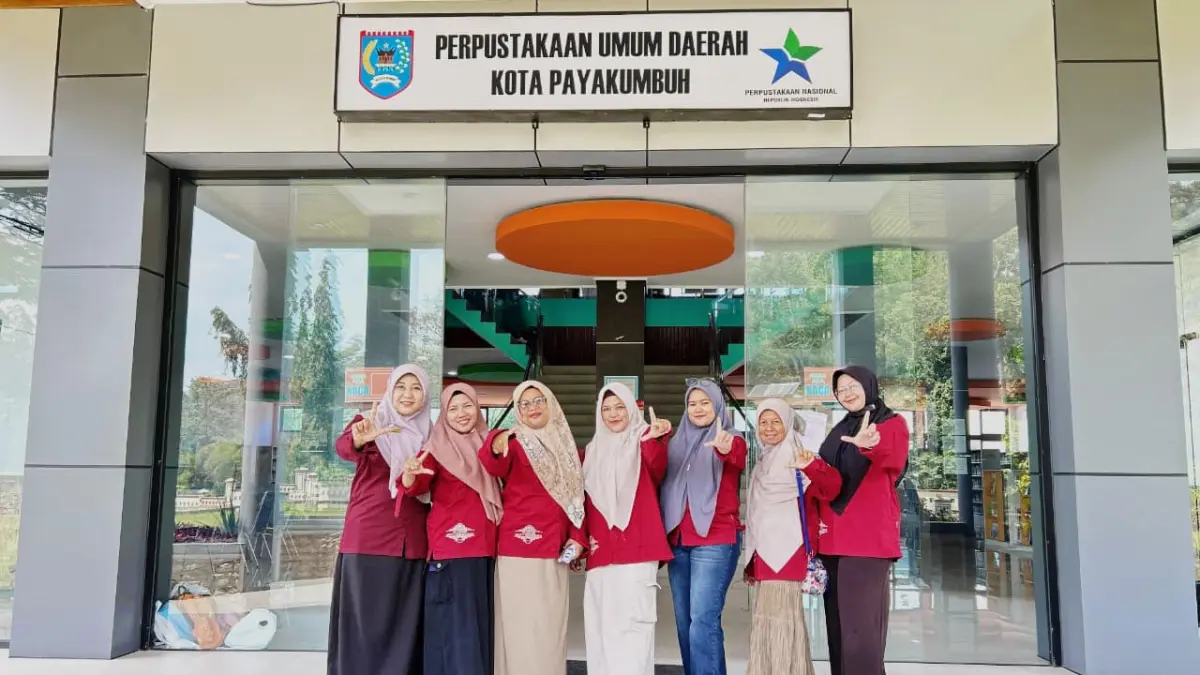
Penulis : Yuyud Andam Mellian, S.S. - Guru Bahasa Inggris SMPN 7 Payakumbuh
Every year, Hari Pendidikan Nasional invites educators to reflect on the purpose of learning. In today’s fast-changing world, that reflection feels increasingly urgent, especially in English classrooms, where traditional methods often fall short of preparing students for real communication and critical thinking.
“Too many students can answer grammar questions but hesitate when asked to express their ideas,” said an English teacher from West Sumatra. This concern is not isolated. Data from the Organisation for Economic Co-operation and Development (OECD), through its PISA assessment, shows that Indonesian students still face challenges in reading literacy, particularly in understanding and interpreting texts critically.
This reality suggests a deeper issue: learning is often focused on surface knowledge rather than meaningful understanding. English teaching, in particular, has long been associated with memorization: tenses, vocabulary lists, and repetitive exercises. While these are important foundations, they are not enough.
Educational experts now emphasize the importance of deep learning. According to Linda Darling-Hammond, “Students learn best when they are actively engaged in meaningful tasks that require thinking, problem-solving, and collaboration.” In English classrooms, this means moving beyond drills toward activities that connect language with real-life use.
For instance, students can be asked to create short presentations about local tourism destinations such as Harau Valley or cultural experiences in Payakumbuh. Such tasks encourage students to use English authentically while developing confidence and critical thinking. Learning becomes more than remembering, it becomes understanding and applying.
Equally important is the principle of inclusive education. Indonesian classrooms are diverse, reflecting a wide range of abilities, backgrounds, and learning needs. However, teaching practices do not always reflect this diversity. Some students thrive, while others struggle to keep up.
“Inclusive education is not about placing all students in the same classroom, but about ensuring every student can participate meaningfully,” noted a report by UNESCO. This requires teachers to adopt flexible approaches: using visual aids, differentiated tasks, and collaborative learning strategies.
For example, in an English lesson, one student might present ideas orally, while another expresses understanding through writing or visual projects. Such flexibility allows each learner to succeed without lowering expectations. Inclusion, therefore, is not about simplifying learning, but about making it accessible.
At the center of this transformation is literacy. Today’s literacy extends beyond reading and writing; it includes the ability to analyze information, communicate ideas, and navigate digital content. English plays a vital role in this broader literacy, as it provides access to global knowledge and opportunities.
According to data from Indonesia’s Ministry of Education, efforts to strengthen literacy through programs like the School Literacy Movement (Gerakan Literasi Sekolah) have shown progress, but challenges remain, especially in fostering higher-order thinking skills. This is where deep learning and English education intersect.
Teachers, therefore, carry a critical responsibility. They are not only language instructors but also facilitators of thinking and communication. By designing tasks that are relevant, interactive, and reflective, teachers can help students become active participants in their own learning.
Hari Pendidikan Nasional is more than a ceremonial event; it is a call to action. It challenges educators to ask difficult but necessary questions: Are students truly understanding what they learn? Are classrooms inclusive enough to support every learner? Are literacy skills being developed for real-world application?
Reimagining English learning does not require drastic change, but it does require intentional effort. Small shiftssuch as encouraging discussion, using realworld contexts, and valuing student voicecan have a significant impact.
As Indonesia continues to strengthen its education system, the focus must remain on meaningful learning for all. Deep learning, inclusive practices, and strong literacy foundations are not separate goals; they are interconnected pathways toward better education.
On this Hari Pendidikan Nasional, the message is clear: English education must move beyond memorization toward transformation, so that every student not only learns, but truly understands and thrives. (*)
Editor : Adriyanto Syafril